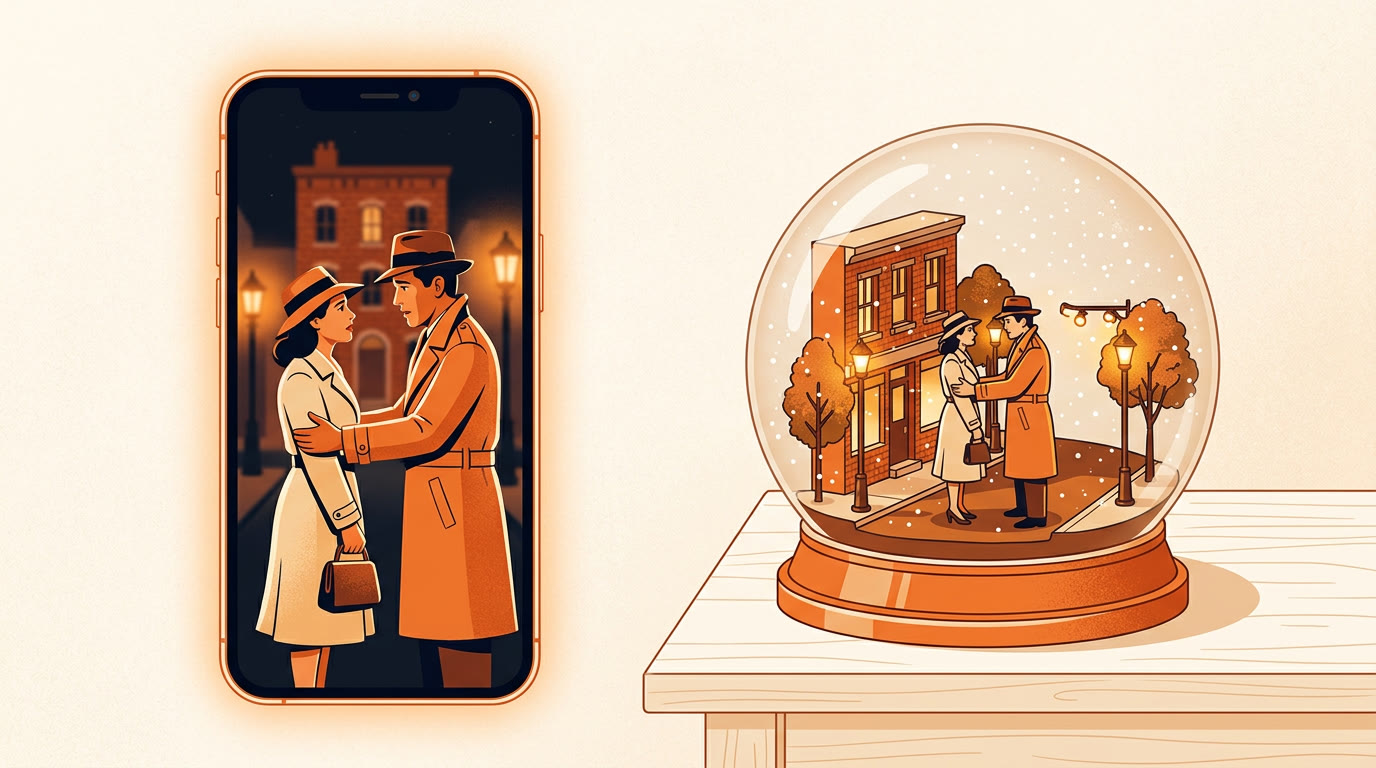
Evaluating an AI microdrama production studio in late 2026 starts with the shape of the work. ReelShort, ShortMax and DramaBox commission seasons of 30 to 80 episodes, and a season needs the same faces, rooms and lighting across hundreds of fast cuts. A single image-to-video generator cannot hold that together on its own. Plot Party and Higgsfield MicroDrama Studio both offer a structured way to do it, with different strengths.
Higgsfield comes from fast social video. Micro Drama Ads turns a product into the turning point of a short vertical story, and its MicroDrama Studio and Short Drama Studio apps plan scripts, casts and episodes for mini series. Plot Party is an episodic workbench for long narrative seasons. It combines 3D set pre-visualization, several frontier models under one balance, and multi-language localization in the same workspace.
TL;DR
Choose Higgsfield when your priority is story-driven ad creative through Micro Drama Ads, or short mini series delivered at up to 1080p. Choose Plot Party when you are shipping a 30–80 episode vertical series that needs an episode file-tree workbench, 3D Snowglobe sets for spatial continuity, AI Character Casting with a built-in IP similarity check, 4K finishing, and batch 40-language AI subtitles and dubbing.
Head-to-Head: Plot Party Studio vs Higgsfield MicroDrama Studio Permalink to “Head-to-Head: Plot Party Studio vs Higgsfield MicroDrama Studio”
| Evaluation dimension | Plot Party Drama Studio | Higgsfield MicroDrama Studio |
|---|---|---|
| Primary design center | Episodic serialized production: a file-tree Drama Studio and Agentic Canvas for scripts, cast sheets, storyboards and episode folders | Story-driven ads through Micro Drama Ads, plus MicroDrama Studio and Short Drama Studio for mini series (Script → Cast & World → Episodes) |
| Spatial and set continuity | 3D Snowglobe turns a line of text or a reference image into a 3D set you can walk through, block and shoot from fixed camera positions | Location and prop reference sheets ("states") guide each generated clip |
| Character consistency and IP safety | AI Character Casting draws multi-view sheets or half-body headshots for 1 to 8 characters at once and runs an IP similarity check | Main character reference sheets with extra looks, generated from four face options or an uploaded photo used with permission |
| Model breadth | 13 models under one balance, including Seedance 2.5 4K, Kling 4.0, MiniMax H3, Nano Banana 2, GPT Image 2.5 and Midjourney (full model list) | Higgsfield's own studio workflows, with output at 480p, 720p or 1080p |
| Localization and dubbing | AI Subtitles & Dubbing batches up to 20 videos into 40 languages and keeps the original BGM and SFX | Not described in Higgsfield's microdrama guides; captions can be added on request through MCP |
| Agent and MCP automation | Plot Party MCP and the HTTP API for Claude, ChatGPT and Cursor, covering the full episode pipeline | Higgsfield MCP with /microdrama-ads for story ads and /short-drama for episodes |
| Cost control | Draft cheaply, then finish approved shots with Seedance 2.5 4K or upscale them with SeedVR 2 | 480p drafts that can be upscaled to 1080p; credits are charged per second of video by resolution |
Higgsfield's details come from its public product pages and guides, which are linked under Sources.
4 Production Bottlenecks That Decide a Season Permalink to “4 Production Bottlenecks That Decide a Season”
1. Spatial Continuity Across 180° Reverse Cuts Permalink to “1. Spatial Continuity Across 180° Reverse Cuts”
A recurring problem in AI microdrama is the background between over-the-shoulder angles. Pure prompt-driven generation tends to move windows, resize furniture and shift the key light from one close-up to the next.
Plot Party addresses this with 3D Snowglobe. You generate or import a location and walk it as a 3D set. Then you place your actors and cameras for each angle, including the reverse, and send those framed shots into models such as Seedance 2.5 or Kling 4.0. Every angle starts from the same set, so the room keeps its layout through the whole dialogue sequence.
2. Cast Locking and IP Clearance Permalink to “2. Cast Locking and IP Clearance”
Distribution platforms are strict about real people's likenesses and copyrighted characters. Generic text prompts also tend to drift: a lead's face changes from scene to scene, or starts to resemble a real actor.
AI Character Casting draws multi-view reference sheets or half-body headshots for 1 to 8 characters at once and runs an IP similarity check before you lock a cast. Approved cards then feed Consistent Character Video, which keeps an actor recognizable across episodes without training a custom model.
Higgsfield's Short Drama Studio also builds a reference sheet for each main character, with extra looks, and its MCP workflow reuses returning characters in later episodes. Whichever tool you choose, check the face, costume and proportions in every shot.
3. Multi-Language Distribution at Season Scale Permalink to “3. Multi-Language Distribution at Season Scale”
Much of a microdrama's revenue comes from international releases in LATAM, APAC and Europe. Exporting 50+ vertical episodes to a separate dubbing tool adds handoffs at every step.
Plot Party keeps localization in the same workspace. AI Subtitles & Dubbing accepts up to 20 videos per batch and re-voices them into 40 languages. It separates speech from the background, translates the dialogue with timing, adds matched voice tracks, keeps the original music and sound effects, and burns in subtitles. Higgsfield's microdrama guides do not describe a dubbing step, so budget for one elsewhere if you use it for international releases.
4. Credit Economics: Cost per Approved Second Permalink to “4. Credit Economics: Cost per Approved Second”
Base subscription price is a poor guide to what a season costs. The number that matters is the cost per approved second: total attributable spend divided by the seconds that make the final cut. Exploring at full resolution burns credits on takes you will never use.
Both platforms support drafting cheaply first. Higgsfield offers 480p drafts and upscales to 1080p. In Plot Party, you iterate on camera movement, timing and performance first. Once the showrunner approves a shot, you finish it in 4K UHD with Seedance 2.5 4K or upscale it with SeedVR 2. See pricing for current credit costs.
Run Your Own 10-Minute Pilot Test (2 Copyable Prompts) Permalink to “Run Your Own 10-Minute Pilot Test (2 Copyable Prompts)”
Run both prompts in 9:16 vertical on each platform with comparable settings.
Pilot Test 1: 180° Penthouse Confrontation Continuity Test (9:16)
Shot 1 (Over-the-Shoulder, Medium Close-Up): Camera positioned over the left shoulder of a male CEO in a dark navy tailored suit, facing a female executive standing beside a floor-to-ceiling glass penthouse window overlooking a rainy city skyline at night. Soft warm interior lighting contrasts with cool blue exterior rain reflections. She turns toward him with a stern expression, holding a silver digital ledger. Cinematic lighting, dramatic microdrama framing, high visual consistency.

Shot 2 (Reverse Angle, Close-Up): 180-degree reverse cut. Close-up on the male CEO's face, dark navy suit collar visible. The city skyline reflections remain visible in the glass wall behind him to the right. Sharp jawline, subtle intense reflection in his eyes, background warm interior lamps match Shot 1 precisely. Photorealistic, 4k render.
Pilot Test 2: Multi-Angle Wardrobe and Prop Persistence Test (9:16)
Shot 1: A young female detective in a beige trench coat with distinct brass buttons inspects a glowing blue data tablet on an office desk. Low angle dynamic tilt, shallow depth of field, sharp focus on the metallic tablet casing.

Shot 2: Wide vertical shot of the same detective walking across the minimalist concrete office. The beige trench coat, brass buttons, and glowing blue data tablet in her right hand remain identical in color, scale, and texture. Consistent studio lighting, seamless visual continuation.
Standardized Evaluation Rubric Permalink to “Standardized Evaluation Rubric”
- Face lock: Does the character keep the same facial structure across the angle change?
- Set geometry: Do window frames, light sources and the skyline stay in place relative to the camera move?
- Lip-sync and expression: Are emotional transitions natural and in sync with the audio?
- Reroll count: How many generations did a production-ready, artifact-free take need?
When to Choose Plot Party vs Higgsfield Permalink to “When to Choose Plot Party vs Higgsfield”
Choose Higgsfield if:
- Your main output is story-driven Micro Drama Ads for performance marketing.
- You want ready-made story cards and a fast path from script to a short mini series at up to 1080p.
- Your team already runs its creative work through Higgsfield's apps or MCP commands.
Choose Plot Party if:
- You are running a serialized 30–80 episode vertical show and need structured episode management and asset organization.
- You need the set to stay identical across 180° reverse cuts, using 3D Snowglobe.
- You want cast sheets with an IP similarity check from AI Character Casting before you lock a cast.
- You release in several markets at once and want AI Subtitles & Dubbing in the same workspace.
FAQ Permalink to “FAQ”
Is Higgsfield MicroDrama Studio better for ads or for a full 60-episode series?
Higgsfield covers both. Micro Drama Ads inside Higgsfield Ads Studio is built for story-driven performance ads, and its MicroDrama Studio and Short Drama Studio apps plan scripts, casts and episodes for mini series. Plot Party is built around the long season: episode folders in Drama Studio, 3D Snowglobe sets, multi-model generation up to 4K and built-in 40-language dubbing. Run the same pilot scene in both before you commit a season budget.
How does Plot Party prevent background drift between dialogue shots?
Build the location once in 3D Snowglobe, place your actors and cameras inside it, and send each framed shot to video generation. Because every angle comes from the same 3D set, window positions, furniture and light sources stay where they were in the previous shot. Still review every reverse angle before you approve it.
Can I use Plot Party and Higgsfield from Claude or ChatGPT through MCP?
Yes. Plot Party MCP gives Claude, ChatGPT and other MCP clients access to scripts, storyboards, character assets and video rendering. Higgsfield MCP offers commands such as /microdrama-ads for story-driven ads and /short-drama for episode production.
Which platform is better for translating an English microdrama into Spanish, Japanese and Korean?
Plot Party has localization built in: AI Subtitles & Dubbing takes up to 20 videos per batch and re-voices them into 40 languages while keeping the original music and sound effects. Higgsfield's published microdrama guides do not describe a dubbing step, so plan for a separate localization tool there.
How do I test both platforms fairly before committing a season budget?
Run the two pilot tests in this article on both platforms with the same 9:16 settings. Score face lock, set geometry, lip-sync and the number of rerolls each approved take needed, then divide total credits spent by the seconds you would actually keep.
Sources and Further Reading Permalink to “Sources and Further Reading”
- Plot Party: all available models
- 3D Snowglobe: 3D world engine for AI filmmaking
- Plot Party AI Character Casting
- Plot Party AI Subtitles & Dubbing
- Plot Party MCP overview
- Higgsfield MicroDrama Studio
- Higgsfield: Micro Drama Ads in Higgsfield Ads Studio
- Higgsfield: how to make an AI short drama series
Published by Plot Party. Product descriptions were reviewed on November 23, 2026; this article does not report measured quality scores.
Run Top AI Video & Image Models in Plot Party Studio
- Seedance 2.5 — Multi-reference AI video generation
- Kling 4.0 — 30-second keyframe-controlled AI video
- Gemini Omni Flash — Six-reference multi-subject video
- MiniMax H3 (Hailuo 03) — Reference-to-video and dialogue workflows
- SeedVR 2 — AI video upscaling and detail restoration
- Nano Banana 2 — Image generation and reference consistency
- GPT Image 2.5 — Image editing and character sheets
- Midjourney — Cinematic key art and world building
- Grok Imagine — Bold concept art and character moods
- Compare all Plot Party models