What Is a Microdrama?
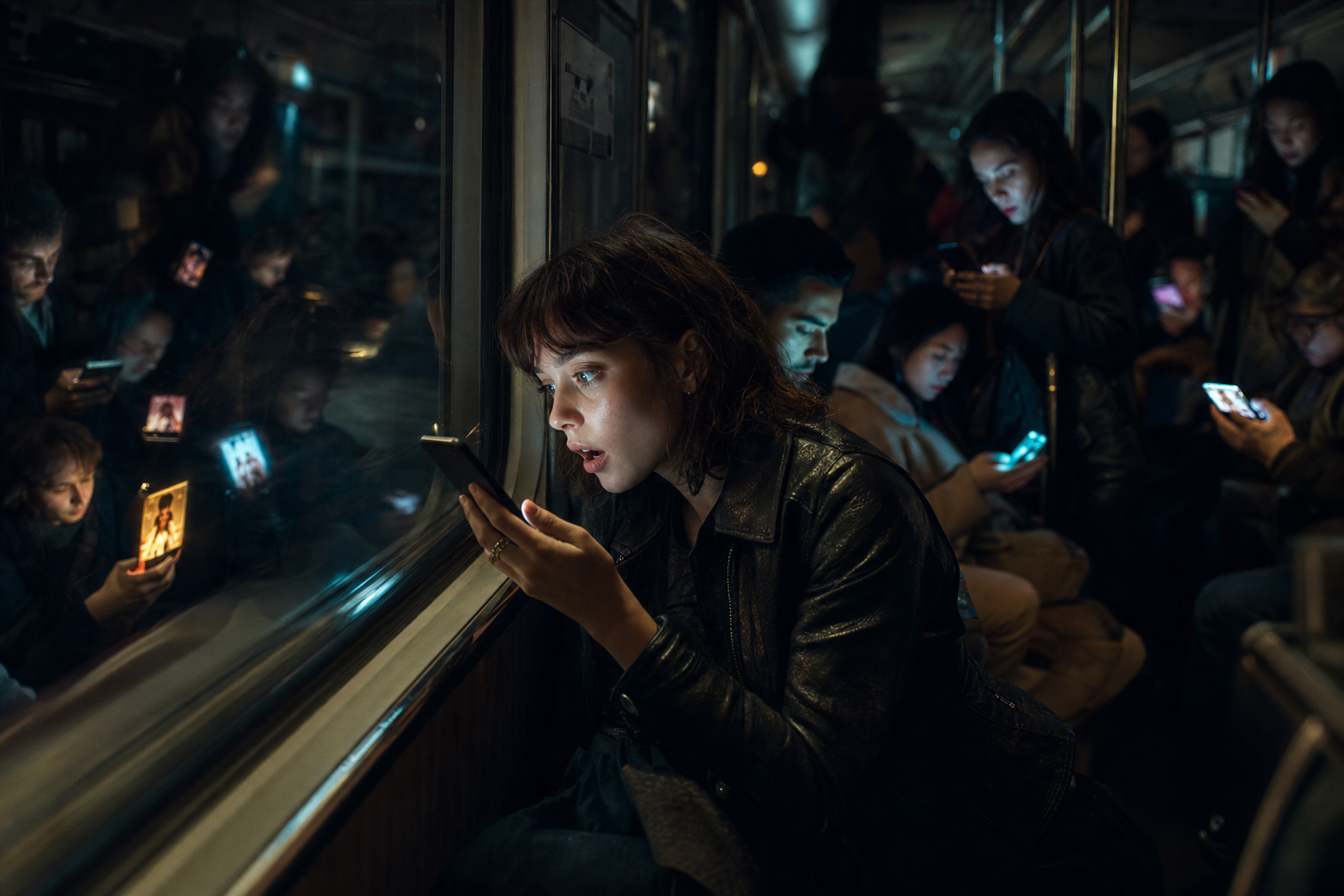
A microdrama is a short-form, vertical video series — typically 1-3 minutes per episode, 60-100 episodes per season — designed to be consumed on smartphones. Think of it as a soap opera optimized for the TikTok generation: fast-paced, cliffhanger-driven, and designed so you can't stop watching.
The format originated in China around 2018-2019, where it grew out of web fiction and comedy sketches on Douyin (the Chinese TikTok) and Kuaishou. By 2020, China's National Radio and Television Administration formally recognized microdrama as a distinct content genre. Since then, it has exploded into a global phenomenon.
The Numbers: A $20 Billion Industry
The microdrama market has grown from almost nothing to one of the fastest-growing segments in entertainment:
| Year | Global Revenue | China Revenue | Ex-China Revenue |
|---|
| 2021 | ~$500M | ~$500M | Negligible |
| 2024 | ~$8.4B | $7B | $1.4B |
| 2025 | ~$11B | $9.4B | $1.6B+ |
| 2026 (projected) | ~$14B | — | — |
| 2030 (projected) | ~$26B | $16.2B | $9.5B |
To put this in perspective: China's microdrama revenue in 2025 ($9.4B) surpassed its entire domestic theatrical box office for the first time. The ex-China international market is growing even faster — at a 28.4% compound annual growth rate — and is projected to reach $9.5 billion by 2030.
In-app revenue alone nearly quadrupled year-over-year in Q1 2025, hitting ~$700 million in a single quarter. Deloitte predicts in-app micro-series revenue will more than double to $7.8 billion in 2026, up from $3.8 billion in 2025.
The microdrama ecosystem is dominated by a handful of apps, most backed by Chinese technology companies:
| Platform | Key Stats |
|---|
| ReelShort | $490M cumulative revenue by March 2025. 15M monthly downloads. Users spend 35.7 min/day — more than Netflix (24.8 min) on mobile |
| DramaBox | $323M revenue in FY2024. The only major platform profitable at scale ($10M net profit). Selected for Disney Accelerator 2025 |
| ShortMax | 3,888% year-over-year revenue growth. 50M+ total downloads |
| Holywater | 60M+ users. Fox Entertainment took an equity stake in 2025. Multi-year deal with Dhar Mann Studios for 40 titles |
| GoodShort | ~30M estimated monthly active users |
ReelShort, owned by Crazy Maple Studio (a subsidiary of Chinese firm COL Group), is the market leader outside China. Its users spend more time on the app per day than users of Netflix, Disney+, or Prime Video spend on mobile — a staggering engagement metric that underscores how addictive the format is.
Hollywood is taking notice. Fox Entertainment invested in Holywater. Range Media Partners and Google's 100 Zeros are launching microdrama initiatives with creators from "The Bachelor," "American Idol," and "Charlie's Angels." Google TV added microdrama discovery tools in March 2026. This is no longer a niche — it's mainstream.
How Microdramas Make Money
The dominant revenue model borrows directly from mobile gaming:
1. Coin/Token-Based In-App Purchases (~74% of global revenue)
Users get the first 8-15 episodes free (the "hook"), then must buy virtual coins to unlock subsequent episodes. This is the same free-to-play model that built the mobile gaming industry. Platforms layer in incentives: watch ads to earn coins, refer friends for bonuses, timed unlocks, and premium tiers.
2. Advertising (~25% of revenue by 2030)
Rewarded video ads (watch an ad to unlock the next episode), interstitial ads, and brand integrations. This is the primary model in price-sensitive markets like Southeast Asia and India.
3. Subscriptions
Weekly or monthly passes for unlimited access. Growing but still secondary to coin-based IAP.
For a deeper creator-focused breakdown, read How Microdramas Make Money: Ads vs In-App Purchases.
The regional preference varies:
- US/Canada: Freemium + IAP (high average revenue per user)
- Southeast Asia/India: Ad-led with low-cost weekly passes
- Latin America: Ad-led with optional episode unlocks
Who's Watching?
The microdrama audience skews female, 25-45, urban, and affluent — but the demographic is broadening:
| Region | Age Distribution |
|---|
| US/Canada | 16-24 (21%), 25-34 (24%), 35-44 (22%) |
| Latin America | 16-24 (30%), 25-34 (26%), 35-44 (17%) |
| APAC | Surprisingly strong uptake among 55+ audiences |
Top microdrama apps have surpassed 150 million active users in Asia alone. In the US, microdrama engagement on mobile now exceeds all major streaming platforms.
The most popular genres are billionaire/CEO romance, revenge narratives, identity-reveal plots, supernatural romance, and family drama. Male-targeted content (action, suspense, urban thriller) is a growing segment.
The Content: What Makes a Microdrama
| Element | Standard |
|---|
| Episode length | 1-3 minutes (sweet spot: 60-120 seconds) |
| Episodes per series | 60-100 |
| Total runtime | ~60-100 minutes per series |
| Aspect ratio | 9:16 vertical (smartphone-native) |
| Paywall placement | After episodes 8-15 |
| Key structural element | Cliffhanger at the end of every episode |
The vertical 9:16 format is non-negotiable — these are designed for one-handed phone viewing. The cliffhanger structure is what drives the coin-based monetization: you have to see what happens next.
Production: Fast and Getting Faster
Microdrama production is a well-oiled machine, especially in China:
| Metric | Range |
|---|
| Series budget | $15,000 - $600,000 |
| Typical budget | $150,000 - $300,000 for 60-100 episodes |
| Cost per finished minute | $1,500 - $4,000 |
| Production timeline | Often under 2 weeks |
| Crew size | 60-90 people (China) |
| S-class premium | $400,000 - $600,000 with cinematic quality |
The ROI can be extraordinary: a $100,000 budget microdrama selling for $1 million is considered achievable. The economics work because the format is efficient — short episodes, reusable sets, fast shooting schedules — and the monetization model extracts revenue per-episode rather than per-series.
China's Role: Where It All Started
China isn't just the largest market — it's the origin and the engine. The trajectory:
- 2002-2018: Web fiction platforms (Qidian, etc.) build the narrative DNA — serialized, cliffhanger-driven, romance/revenge/fantasy genres
- 2018-2019: Comedy sketches and short dramas emerge on Douyin and Kuaishou
- 2019: Kuaishou launches "Kuaishou Small Theatre," formalizing the format
- 2020: NRTA officially recognizes microdrama as a distinct genre
- 2020-2022: Industrialization — standardized 9:16 vertical shooting, sub-2-week production cycles, freemium monetization
- 2023-2025: Global expansion — Chinese-backed companies (Crazy Maple Studio, Dianzhong, Jiuzhou Culture) build the dominant international platforms
- 2025: Regulation tightens — mandatory registration before publication, hundreds of titles pulled for content violations
Douyin alone launched 20,000+ short dramas in 2024. China's total microdrama output hit 100 billion yuan ($14.58B) in 2025, doubling year-over-year.
The Global Expansion
The international spread follows a clear pattern:
Latin America is the surprise growth engine. Brazil is now the #1 source of ReelShort downloads (21.96% of total), ahead of the US (9.29%). The ad-led model fits the region's price-sensitive audience.
The United States is the highest-revenue market outside China, generating $819 million in 2024 (~60% of ex-China revenue) with a projection of $3.8 billion by 2030. By end of 2026, the US is expected to account for 50% of all microdrama revenue outside China.
Japan is forecast to top $1.2 billion by 2030, making it the largest APAC market outside China, supported by LINE Pay integration and growing local production.
Southeast Asia is seeing strong traction — 80% of titles launched in Thailand and Indonesia made top-3 rankings in their markets.
How AI Is Changing Everything
This is where it gets interesting for creators. AI is compressing the microdrama production pipeline:
2024-2025: AI used for dubbing, subtitles, VFX enhancement, and localization — mostly post-production support.
2026: Full-stack AI tools are compressing the production pipeline from 11 manual steps to 3. Key developments:
- Seedance 2.0 (ByteDance) — multimodal video model engineered specifically for short drama, addressing character consistency across episodes. Read our deep dive on Seedance 2.0 →
- Kling V3 (Kuaishou) — another major AI video model from a microdrama platform giant
- Vigloo (SpoonLabs/Korea) — produced its first English-language vertical drama fully using AI, made in 8 weeks by fewer than 10 people. Aims to produce ~30% of its annual slate using AI workflows
- "Spore Fall" (Edenstone, Singapore) — a human-written, AI-realized series showcasing the hybrid approach
The implication is massive: a $150,000 production could become a $15,000 production with AI handling character generation, scene composition, video generation, and post-production. This democratizes the format for independent creators.
Plot Party is built specifically for this intersection — AI-powered tools for creating microdramas with consistent characters, storyboard-driven workflows, and video generation. See our step-by-step tutorial to create your first episode.
The Opportunity for Creators
The microdrama gold rush is happening right now. Here's why it matters for independent creators:
1. Low barrier to entry with AI tools. You no longer need a crew of 60 people and $150,000. AI tools like those on Plot Party let solo creators produce microdrama-quality content.
2. Proven monetization. The coin-based IAP model is battle-tested and generates real revenue. A single hit series can generate millions.
3. Global demand outstrips supply. Platforms are desperate for content. DramaBox was selected for Disney Accelerator. Fox invested in Holywater. Google TV is adding microdrama discovery. The distribution infrastructure is being built right now.
4. IP value. Successful microdrama series become franchises. Characters, worlds, and storylines can be extended, licensed, and adapted for traditional media.
5. The format is AI-native. Short episodes, consistent characters, formulaic structure — these are exactly the strengths of current AI video generation models.
What's Next?
The microdrama industry is at an inflection point. The format has proven product-market fit at massive scale. The infrastructure (platforms, monetization, distribution) is mature. And AI is about to collapse production costs by 10x.
The question isn't whether microdramas will be a major entertainment format — they already are. The question is who will create the next wave of content: traditional studios adapting to vertical, or a new generation of AI-native creators building from scratch.
Ready to be part of it? Start creating on Plot Party →
For a hands-on walkthrough, check our guide to creating a drama episode, or explore what AI video tools are available to power your productions.
Sources: Omdia, Deloitte, Variety, Deadline, Sensor Tower, MPA/Ampere Analysis, World Screen, Hollywood Reporter.
FAQ
What is a microdrama?
A microdrama is a short-form vertical video series designed for mobile viewing. Episodes are usually 1-3 minutes long, built around fast emotional turns, cliffhangers, and serialized viewing.
How do microdrama apps make money?
Most microdrama apps use a freemium model. Viewers watch the first episodes for free, then unlock later episodes with coins, subscriptions, rewarded ads, or paid passes.
Why are microdramas popular with creators?
Microdramas are popular with creators because they have lower production costs, fast feedback loops, clear genre formulas, and strong mobile distribution. AI video tools make the format even more accessible to small teams and solo creators.
How is AI changing microdrama production?
AI is reducing the time and cost required to create short drama episodes. It can help with scripts, characters, scene design, video generation, localization, and editing, making microdrama production more accessible outside traditional studios.